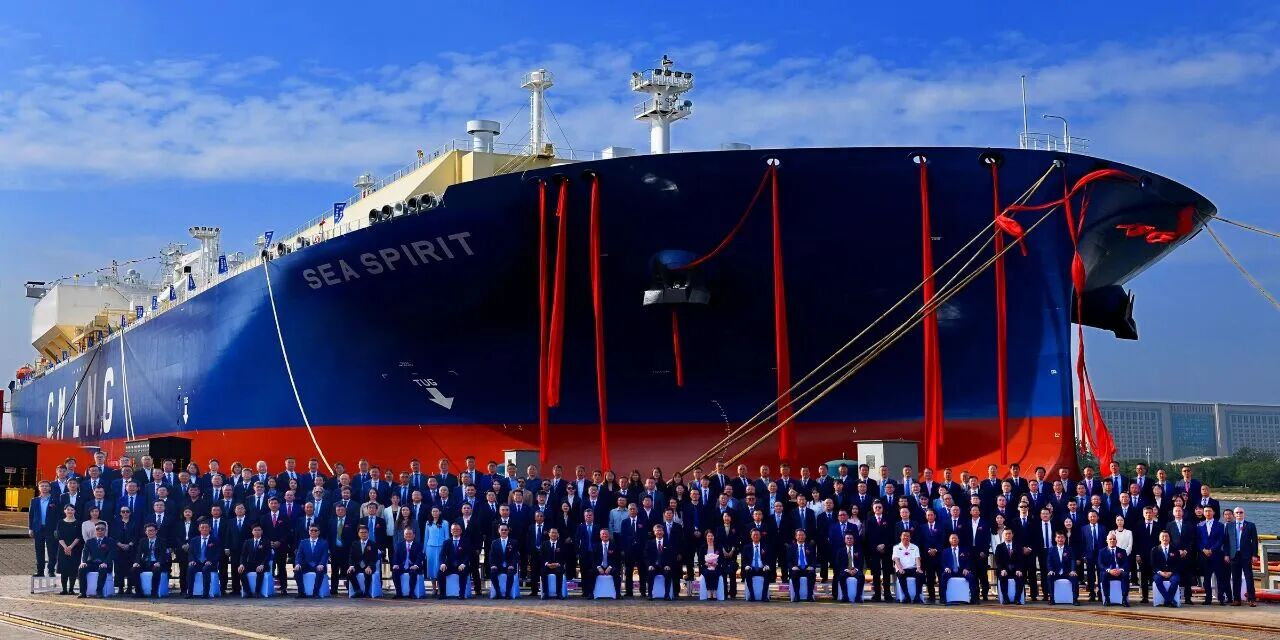

On December 1, 2025, the international seminar “MASS: Preparing for the New PhasePreparing for the New Phase” was successfully held in Shanghai, co-organized by the COSCO–Shanghai Jiao Tong University International Research Center for Maritime Rules and Standards and the Shipping AI Data Platform. The event gathered experts from government agencies, international organizations, shipping companies, universities, and technology firms to discuss the development, regulation, and standardization of Maritime Autonomous Surface Ships (MASS).

The seminar highlighted that the MASS regulatory framework is nearing finalization, with formal approval scheduled at the 111th IMO Maritime Safety Committee (MSC111) in May 2026, followed by a three-year “experience accumulation period”—a key stage for transitioning MASS technologies from demonstration to large-scale deployment.
In his opening remarks, Wang Yu, Deputy General Manager of Technology& Innovation Division,China Cosco Shipping Corporation Limited, emphasized that MASS forms the foundation of intelligent shipping. He called for collaborative efforts in scenario adaptation, standard development, and ecosystem integration to translate technological feasibility into tangible improvements in safety, efficiency, and sustainability.
Representatives from academia highlighted universities’ continued role in research, talent development, and industry-academia collaboration, while industry experts, including Li Yanqing, Secretary General of the China Association of the National Shipbuilding Industry and Chair of ISO/TC8, stressed the need for a long-term, goal-oriented approach in MASS development, promoting cross-sector cooperation and practical data governance.
COSCO Shipping Group shared its practical experience in intelligent ship platforms, focusing on safety equivalence, human-machine collaboration, autonomous machinery spaces, and operational innovation. Plans include testing autonomous functions on over 100 vessels and advancing international standards such as the “Minimum Safe Lookout Range”.


From a technical perspective, Zhang Binghua, Chairman of Marautec, explained the practical value of the Minimum Safe Lookout Range standard, which can enhance MASS operations while also improving safety and reducing crew workload on existing vessels.
International participants from Norway, Germany, South Korea, Japan, France, and Liberia shared insights on MASS technology R&D, demonstration projects, system verification, cybersecurity, and international standards coordination.
During the roundtable forum, experts agreed that the industry must fill in the operational details during the experience accumulation period—covering ODD quantification, system verification, crew training, ship-shore collaboration, and cybersecurity resilience. Looking ahead, intelligent systems are expected to become highly effective crew assistants, with human-machine collaboration deepening and highly autonomous operations gradually realized on specific shipping routes.